Quick Article Summary
- The Core Mechanism: Microneedling uses physical micro-injuries without heat to stimulate collagen, while the Helix CO2 laser uses fractional thermal energy to ablate (vaporize) damaged surface cells and heat deeper layers.
- Recovery Profiles: Microneedling downtime takes 24 to 72 hours of light redness. Helix CO2 downtime ranges from 2 to 4 days for superficial settings (like CoolPeel) to 5 to 7 days for deeper ablative resurfacing.
- Primary Targets: Microneedling works well for early texture issues, enlarged pores, and light scarring. Helix CO2 targets stubborn sun damage, deeper wrinkles, and pronounced unevenness.
- Candidate Qualification: Choose microneedling if you need zero social disruption. Choose Helix CO2 if you want visible correction in fewer visits and can clear your calendar for a few days.
If you’re researching ways to smooth fine lines, tighten lax skin, or soften old acne scars, you’ve likely realized the aesthetic market is crowded with devices. Two treatments stand out at the top of most consultations: microneedling and CO2 laser resurfacing.While both treatments trigger your body’s natural collagen repair cycle, they do it in completely different ways. One relies on physical mechanical channels, while the other uses targeted light energy and heat. Understanding how these mechanisms work makes it easy to decide which option matches your skin type, your tolerance for recovery, and your aesthetic goals.
How Microneedling Works
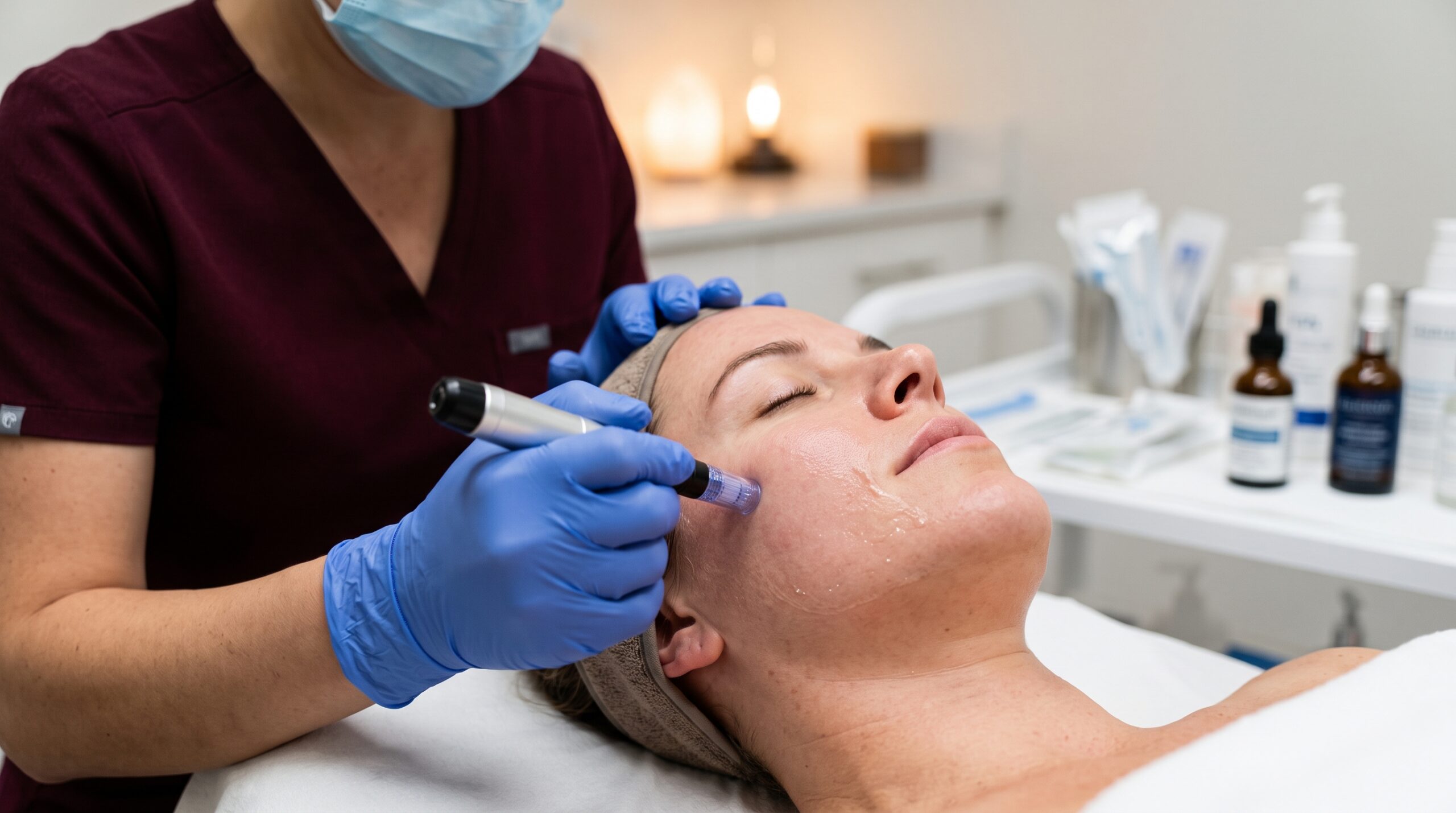
Microneedling—often called collagen induction therapy—uses a motorized handpiece equipped with fine, sterile surgical needles. As the device glides across the skin, it punctures the epidermis and upper dermis, creating thousands of microscopic channels.
- No thermal energy: Because there isn’t any heat involved, the surrounding tissue stays unaffected by thermal spread.
- Safe for most complexions: The lack of heat makes traditional microneedling safe across virtually all skin types with a low risk of post-inflammatory redness.
- Gradual remodeling: The micro-injuries signal your fibroblasts to lay down new collagen and elastin, gradually refining texture over several weeks.
How the Helix CO2 Laser Works
The Helix CO2 laser is an advanced fractional laser that operates at a 10,600 nm wavelength, targeted directly at water molecules in your skin cells. When the laser beam hits the surface, it instantly vaporizes tiny columns of tissue (ablation) while leaving tiny bridges of untreated skin between them to speed recovery.
- Ablative plus thermal remodeling: Beyond removing weathered surface tissue, the laser creates a controlled zone of heat in the deeper dermis. This heat tightens existing collagen fibers and stimulates aggressive long-term structural remodeling.
- Tunable intensity: Unlike older CO2 systems that required two weeks of raw healing, modern platforms like Helix allow providers to dial in pulse duration and depth. It can run light superficial passes (CoolPeel mode) or deeper fractional ablative settings depending on what your skin needs.
Breaking Down Laser Skin Resurfacing Downtime
Recovery time is often the deciding factor for busy patients. Comparing microneedling vs CO2 laser comes down to how many days of redness you’re prepared to manage.
| Feature | Microneedling | Helix CO2 (CoolPeel) | Helix CO2 (Full Resurfacing) |
|---|---|---|---|
| Primary Method | Mechanical needles (no heat) | Fractional ablative pulse (low heat) | Deep fractional ablation + thermal heating |
| Typical Downtime | 24 to 48 hours | 2 to 4 days | 5 to 7 days |
| Post-Care Sensations | Mild sunburn feel, light tightness | Dry, sandpaper-like texture | Swelling, peeling, pinpoint crusting |
| Makeup Timeline | Safe after 24 hours | Safe after 48 hours | Safe after 5 to 7 days |
| Session Frequency | Series of 3 to 6 sessions | Series of 2 to 3 sessions | Typically 1 to 2 sessions |
Frequently Asked Questions
Is microneedling or the Helix CO2 laser more painful?
Both treatments are well tolerated because providers apply a topical numbing cream 30 to 45 minutes beforehand. Microneedling feels like light vibration with minor prickling over bony areas like the forehead. The Helix CO2 laser feels like quick, hot snaps. Patients generally report that the post-treatment warmth of CO2 feels like a mild sunburn for a few hours.
Can I combine microneedling and CO2 laser treatments?
Yes, but not on the same day. Many providers alternate treatments throughout the year. For example, you might do a Helix CO2 session in late autumn to clear summer sun spots, followed by quarterly microneedling sessions in the spring and summer to maintain collagen stimulation safely.
How many sessions of each do I need for visible results?
Microneedling works cumulatively, so providers usually recommend a series of 3 to 6 sessions spaced 4 to 6 weeks apart. With the Helix CO2 laser, you’ll see substantial improvement in skin clarity and tightness after just 1 or 2 treatments, depending on the energy levels used.
Which treatment is safer for darker skin tones?
Microneedling is generally safer for deeper complexions because it avoids heat, which can trigger melanocytes and cause dark spots. While advanced fractional CO2 devices like Helix have refined pulse controls, lasers still carry a higher pigment risk for olive and deep skin tones and require careful candidate selection.
Both treatments offer reliable ways to restore skin elasticity and smooth out uneven texture, but they serve different lifestyles. If you’re looking for an easy, no-downtime refresh you can fit into a lunch break, microneedling is tough to beat. If you want to address etched wrinkles and years of sun damage in a single, focused session, the Helix CO2 laser delivers the depth and precision you need. A consultation with an experienced local provider will help you map out the right timeline for your skin.